US Eases Sanctions Briefly, Lets India Purchase Russian Oil for 30 Days During Gulf Crisis (Image Courtesy:Wikipedia Commons)
New Delhi: There is an atmosphere of war in the Gulf, tensions between Iran and Israel-America are at their peak, and the fear of rising oil prices is beginning to haunt the world. Meanwhile, America on Friday gave important relief to India. Indian refineries have been given a "temporary exemption" to buy Russian oil for 30 days.
US Treasury Secretary Scott Besant announced this. He said that due to the Gulf crisis, pressure on the Strait of Hormuz has increased significantly and the purpose of this relaxation is to maintain the supply of oil in the global market. An official license was issued by the US Treasury Department in which it was said that permission is given to sell Russian oil loaded on ships to India till March 5, 2026. This discount will be valid till 3 April 2026.
Why is the US, which has imposed sanctions on Russia, allowing India to buy Russian oil? Besant clarified that this is a "deliberate short-term move" and will not bring any major economic benefit to the Russian government, as it only involves oil that is already stuck on ships at sea.
Before the Russia-Ukraine war in 2022, India was importing only 2.5 percent of its oil from Russia. But after the US and European sanctions, Russian oil became cheaper and India became the second largest buyer of Russian oil—currently about 30 percent of the oil comes from Russia.
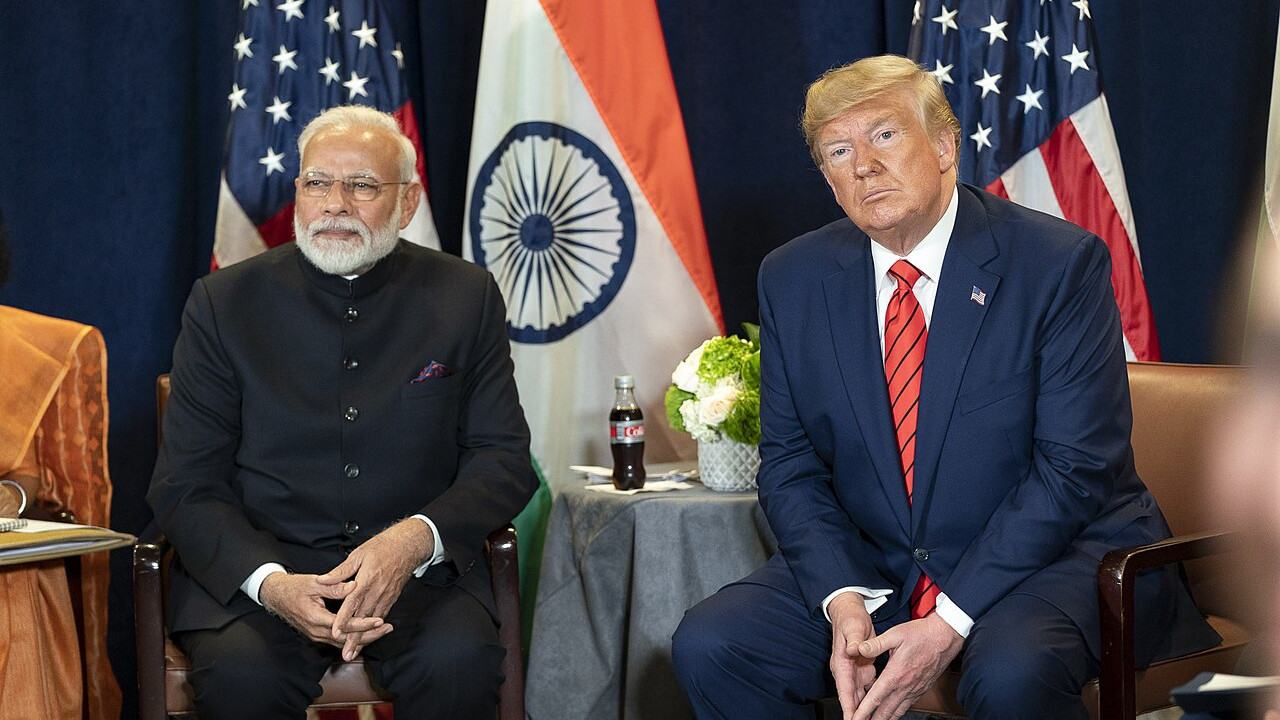
Trump had imposed an additional 25 percent tariff on Indian goods as “punishment” for buying Russian oil, on top of the already imposed 25 percent reciprocal tariff—a total of 50 percent. Then a deal was struck in February 2026 in which India reduced tariffs to 18 percent in exchange for a “commitment” to stop buying Russian oil. Only the oil, which is already floating, has been allowed to reach India. No new supply.
India fulfills about 40 percent of its oil needs from the Middle East, a large part of which comes through the Strait of Hormuz. Iran recently claimed to close this route, posing a direct threat to the supply chain. However, government sources say that India's energy security is still strong and the country's strategic petroleum reserve is capable of meeting the needs of about 74 days.
India never officially accepted this "commitment". India's Ministry of External Affairs says that the energy security of 140 crore Indians is paramount and all decisions will be taken from this perspective. Now America itself is giving a relaxation of 30 days. America also understands that India cannot stop Russian oil completely at the moment.
The essence is that on one hand America wants India to give up Russian oil, on the other hand due to the Gulf crisis it itself has to allow India to buy Russian oil. This is a strange turn of diplomacy and energy politics where everyone's interests are entangled with each other.




Copyright © 2026 Top Indian News